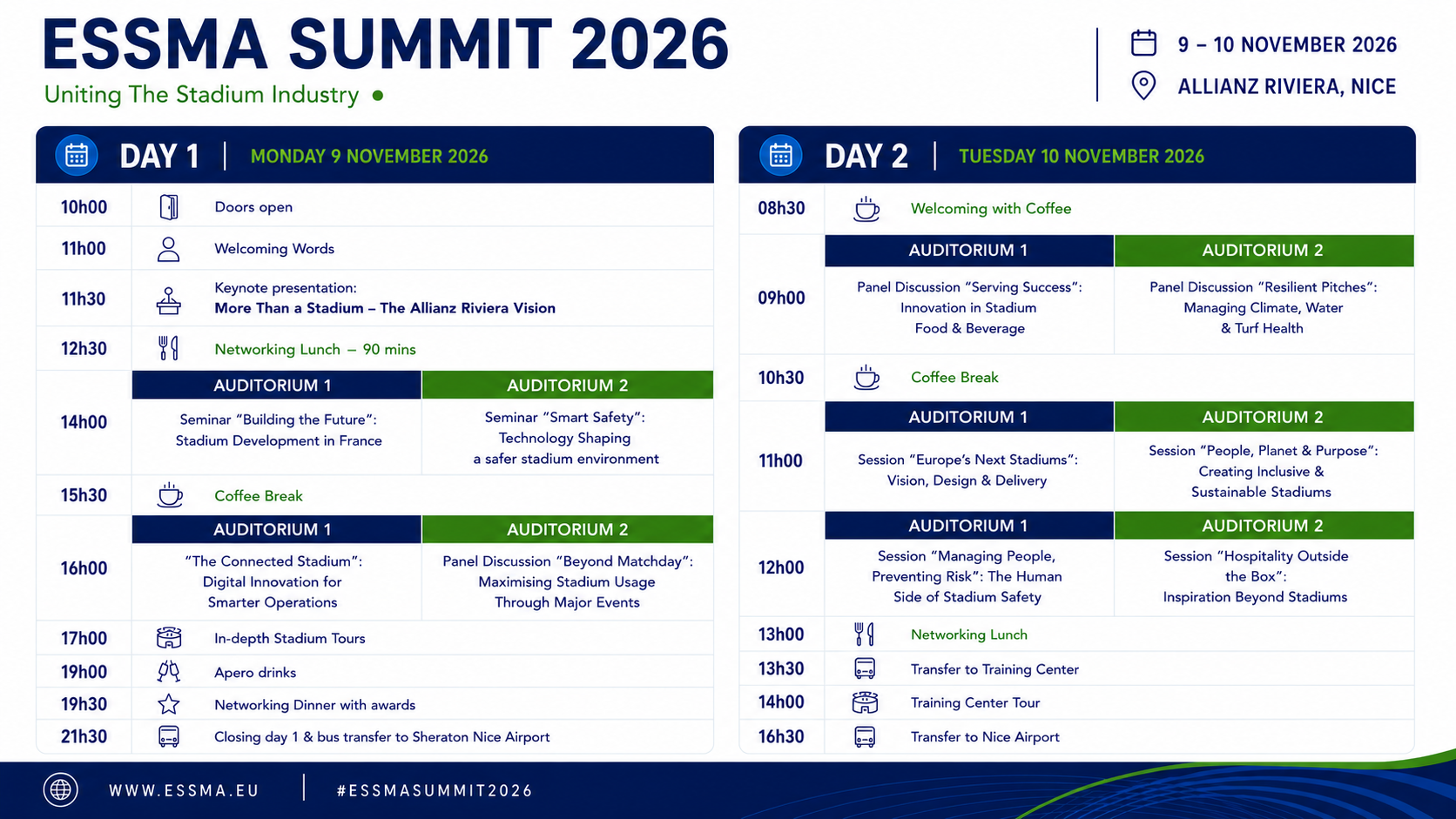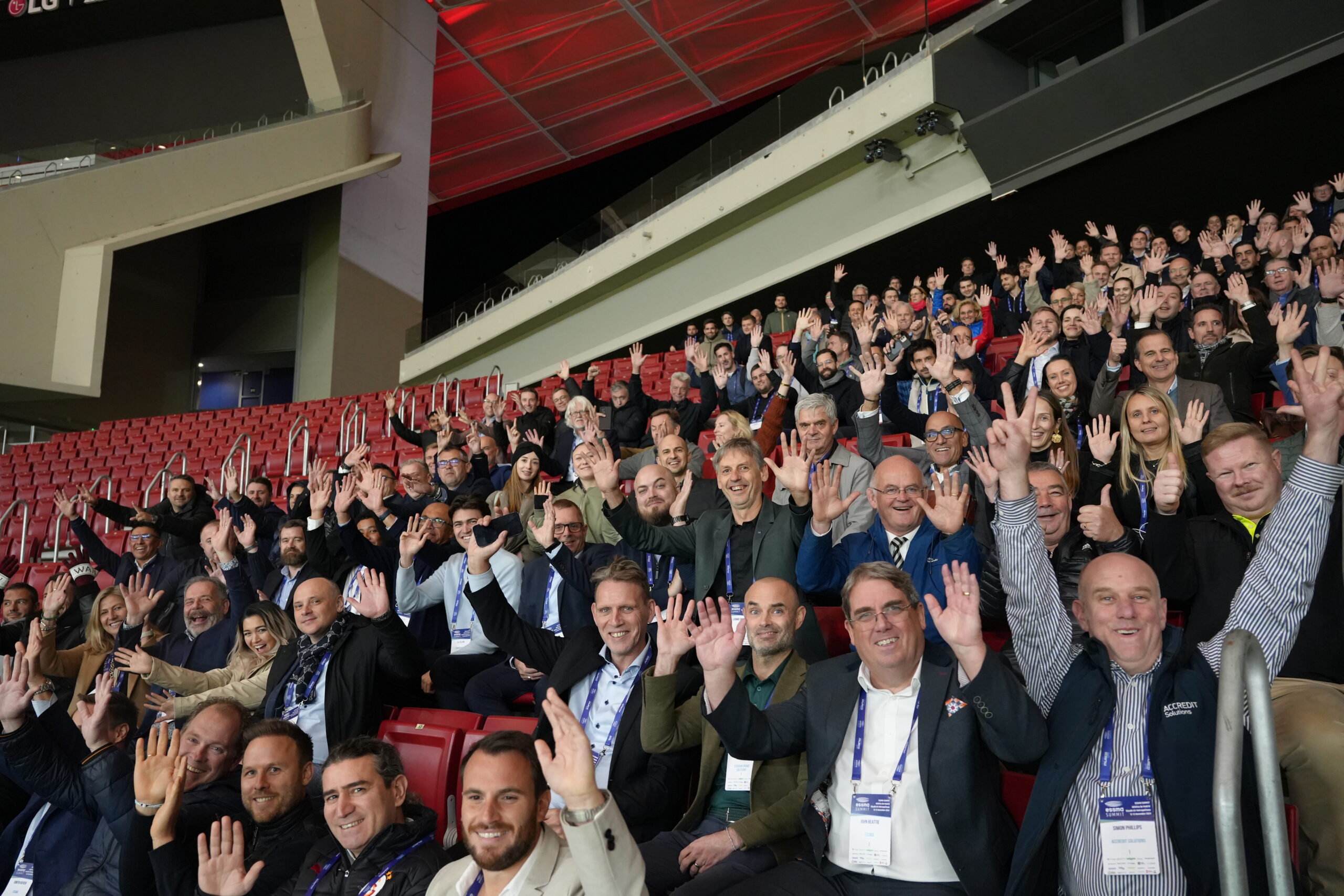
About the summit
Stadiums are becoming destinations
Atlético de Madrid presented its ambitious €800 million Ciudad Deportiva, demonstrating how stadium development increasingly extends beyond the venue itself. Sports facilities, leisure, entertainment, commercial spaces and community infrastructure are being brought together to create destinations that remain active throughout the year.
St. Louis CITY SC similarly demonstrated how CITYPARK combines football with sustainability, community engagement and fan experience.
Safety starts with people, supported by technology
Safety specialists from SGSA, Juventus, Wembley Stadium, Tomorrowland, Brøndby IF, KAA Gent and others explored how stadium security continues to evolve.
Technology is becoming increasingly important, from facial recognition and palm-vein identification to advanced crowd-management systems. Yet one message remained clear: well-trained stewards, strong cooperation between stakeholders and effective interaction with supporters remain fundamental to stadium safety.
Connected stadiums need to deliver tangible value
Technology should not be introduced simply because it is available. The strongest cases presented at the Summit demonstrated measurable benefits.
Sporting CP discussed its Wi-Fi 6E implementation, Valencia CF demonstrated how data from more than 520,000 fan profiles supports personalised communication, and RSC Anderlecht showed how its payment transformation contributed to increased F&B performance. Real Zaragoza, Cleveland Browns and CD Leganés provided further examples across ticketing, biometrics, merchandise and digital fan engagement.
Stadium development requires collaboration
LaLiga, Real Zaragoza, Getafe CF and IDOM explored the changing stadium landscape in Spain. Their cases demonstrated the importance of bringing clubs, leagues, architects and other stakeholders together early in the development process.
New and renovated stadiums increasingly need to combine sporting requirements with accessibility, sustainability, hospitality, technology and opportunities for non-matchday utilisation.
Sustainability is moving from ambition to measurement
A dedicated sustainability track examined ESG strategy, regulations and practical implementation.
Examples from Croke Park, AS Monaco, Atlético de Madrid, Stadio Olimpico and Johan Cruijff ArenA demonstrated how venues are addressing waste, energy, water and biodiversity. Particular attention was given to the Green Event Standard, developed to help venues measure and compare the sustainability impact of individual events.
The discussions reinforced the need to move beyond isolated initiatives towards measurable strategies that involve the entire organisation and its value chain.
Hospitality is about experience, not simply luxury
Fulham FC, Aviron Bayonnais and RCD Espanyol explored how expectations around stadium hospitality are changing.
Successful hospitality increasingly combines personalisation, comfort, atmosphere and local identity. Technology can support this evolution, but spaces must remain authentic to the club and flexible enough to generate value beyond matchdays.
Accessibility needs to be embedded throughout the fan journey
The accessibility MasterMind highlighted that inclusion extends far beyond physical infrastructure. Accessibility audits, staff training, audio-descriptive commentary, accessible digital platforms and continuous consultation with disabled supporters should all form part of a long-term strategy.
One overarching takeaway
Across every topic, the same principle emerged: the modern stadium is no longer simply a place to stage a match.
The venues creating the greatest return are those that combine smart investment, efficient operations, technology, sustainability and memorable experiences to create value on matchdays, non-matchdays and for the wider community.