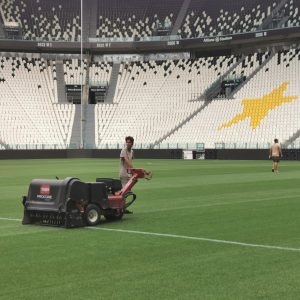

Hybrid Pitches: Durability and Quick Recovery
London Stadium chose to install a fully hybrid pitch after thorough testing at Upton Park, their former home ground. These trials revealed no significant damage from athletics events such as the javelin, discus, and hammer throw. Even after hosting the Paralympic Games, only minor interventions were required: reseeding areas impacted by javelin and discus, and adding sand beneath the surface following hammer throw competitions. It was also noted that a 14-day grow-in period prior to major events ensures the pitch is resilient and in optimal condition. Since the switch to hybrid turf, London Stadium has successfully hosted both football and athletics events without compromising pitch quality.
Natural Grass: Higher Maintenance Commitment
Letzigrund Stadium in Zurich continues to rely on natural grass, balancing football, athletics events, and concerts. While natural turf performs well, it requires a more hands-on maintenance approach. For example, the shot put area is routinely replaced following events, while damage from discus and javelin throws is repaired using lawn forks. The hammer throw sector, though used less frequently, often demands the replacement of larger turf tiles. Although natural grass has lower installation costs than hybrid systems, the ongoing repair work and labour-intensive upkeep are notable drawbacks, especially when fast transitions to football are necessary.
Stade de France: The Hybrid Advantage
Stade de France made the transition to a hybrid pitch in 2016 ahead of the UEFA Euro. This upgrade proved crucial during the Olympic and Paralympic Games, where the venue hosted 35 athletics sessions over 17 days. Despite hundreds of throwing events, the reinforced hybrid surface successfully minimised damage and significantly reduced daily maintenance demands. This ensured that Stade de France could maintain a consistent, high-quality pitch throughout both athletics and football events, showcasing the benefits of hybrid systems in multi-use stadiums.
Stadio Olimpico: Climate-Optimised Natural Turf
In Rome, Stadio Olimpico employs a natural grass system adapted to the Mediterranean climate. The use of Bermudagrass and Perennial Ryegrass creates a surface that performs similarly to hybrid pitches during the athletics season in June but at a lower upfront cost. However, for stadiums in continental climates, hybrid pitches may offer superior resilience. Stadio Olimpico also makes use of stitched turf systems, which provide better durability against divots from events such as shot put, javelin, and discus throws. Despite these reinforcements, some post-event repairs remain necessary. Additionally, the use of lighting rigs and undersoil heating helps ensure optimal turf conditions year-round.
Ivo Lamot, CEO of ESSMA partner SIS Pitches explains how hybrid grass has been used around the world to help stadiums stage different sporting events, as well as tournaments through off-season and pitch covered on-field events like concerts. “As the requirement for stadiums to become multi-purpose grows around the globe, hybrid grass can offer venue and grounds managers the peace of mind they need. The reinforcement that stitched hybrid fibres give the surface, ensures that it can withstand up to three times more game time and cope with the varied type of wear that different sports will have on a pitch. When it comes to covering pitches for events, hybrid grass supports the natural plant and helps it to be stronger and healthier due to a more developed and deeper root structure. This means not only do you have a more aesthetic, consistent, and safer pitch but it will lead to a more rapid recovery resulting in a match-ready surface.”
 SIS pitch at OH Leuven
“Hybrid grass is a trusted solution to have brought very successful results at major venues, including the Stade de France during the recent Olympics where it coped with both rugby and track and field athletics. Additionally, we have provided hundreds of multi-purpose surfaces around the world. This includes the pitch construction, installation of hybrid grass and ongoing maintenance of an extremely busy and fully indoor pitch in Saudi Arabia. Our teams help the venue regularly stage boxing events and concerts on a covered pitch but then just days later host Saudi Pro League football matches.”
Conclusion: Tailoring Pitch Choices to Each Stadium
Based on feedback from the four stadiums, it is clear that both hybrid and natural grass systems offer distinct advantages and challenges. Hybrid pitches—such as those at London Stadium and Stade de France—provide greater durability and require less frequent maintenance, making them particularly suitable for venues that regularly host both football and athletics. Natural grass, as implemented in Zurich and Rome, remains a viable option in favourable climates but typically demands more intensive upkeep, especially following athletics events.
Ultimately, the choice between a hybrid or natural grass system should be informed by factors such as local climate conditions, available maintenance resources, and the frequency and scheduling of events. However, the case studies indicate that hybrid systems may offer the versatility and resilience required to accommodate the dual demands of top-level football and recurring athletics competitions, including high-profile events such as Diamond League meetings.