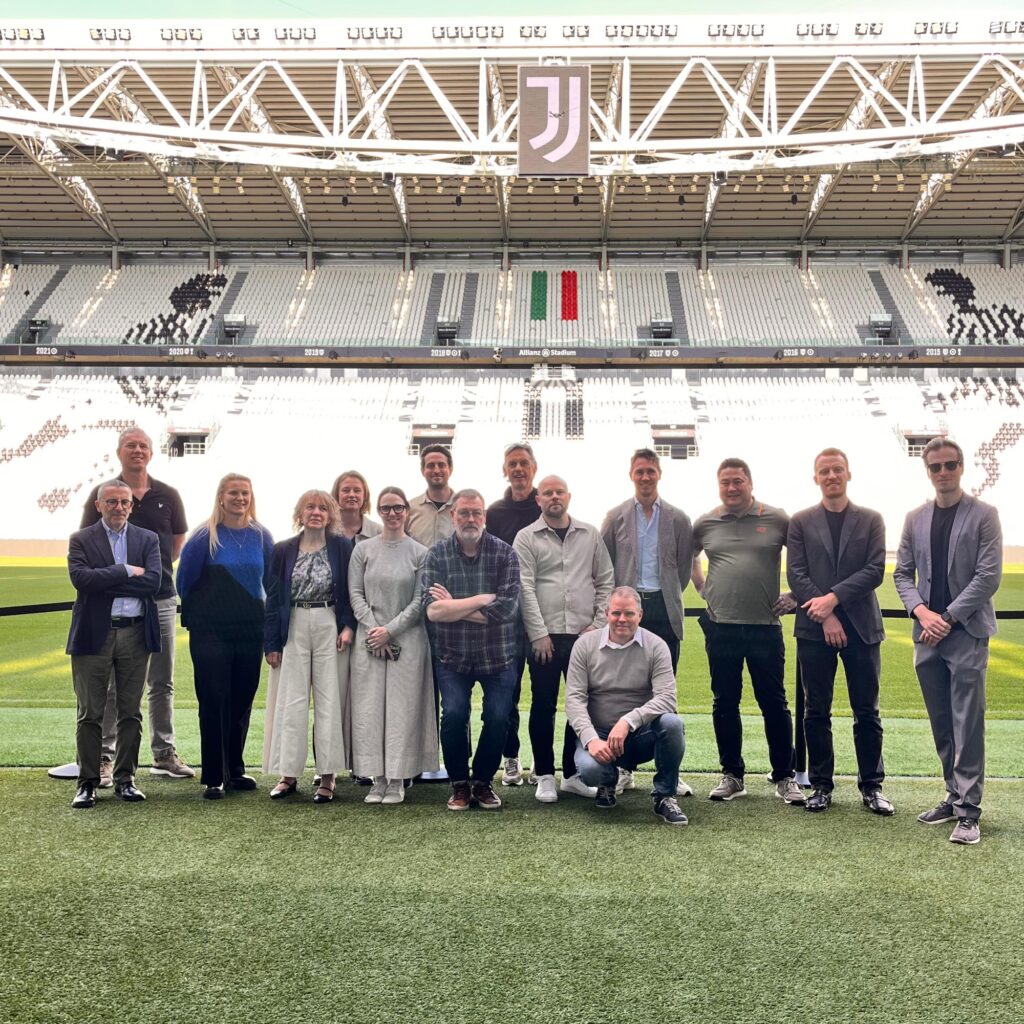
A platform for shared learning
The ESSMA Sustainability Cohort was created to provide a trusted platform for stadiums and clubs to exchange experiences, compare progress and explore how sustainability can be embedded more effectively in day-to-day operations.
This spirit of shared learning was central throughout the meeting. In his welcoming words, Francesco Gianello, ESSMA President and Juventus Facilities Management Director, underlined that the cohort is part of a wider journey, with each session offering the opportunity to learn from different venues, local contexts and operational approaches.
The meeting also highlighted the importance of connecting sustainability to business value. Participants stressed that sustainable transformation is more likely to gain internal support when it is linked to stronger venue performance, better event bids, improved operations and long-term commercial relevance.
Sustainable catering and future event requirements
The first day focused on sustainable catering operations and the future of sustainable events.
Beatrice Cerea of Vi.Co.Ok, the hospitality catering partner at Allianz Stadium, shared how the company is working to combine quality catering with responsible sourcing, waste reduction, sustainable packaging, energy efficiency and local supplier relationships. Her presentation showed how sustainability in hospitality catering depends on practical daily decisions, from menu design and staff training to supplier selection and traceability.
Susie Crabbe, Sustainability Manager at Levy, then presented Levy’s approach to embedding sustainability into food and beverage operations. Key themes included carbon literacy, food waste reduction, plant-based menus, social value, supplier engagement and the importance of educating venue teams. The session reinforced the role of catering partners as active contributors to wider stadium sustainability strategies.
The final presentation of the day was delivered by Patricia Yagüe, Head of Sustainability for Live Nation EMEA, who explored what the sustainable event of the future could look like. She explained how artists, fans, regulation and internal company targets are increasingly shaping event requirements. Topics such as renewable energy, waste separation, water refill stations, data tracking, plant-based food and the reduction of single-use plastics are becoming more prominent within event operations and artist riders.
For the cohort, this session offered valuable insight into how stadiums can prepare for future expectations from event promoters, artists and audiences.
Juventus’ ESG journey and community impact
The second day opened with a deep dive into Juventus’ sustainability journey, presented by Felice Fabrizio and Giulia Rosina.
Juventus published its first ESG report in 2013 and has since developed a more structured approach to sustainability. Its current ESG strategy, “Black, White and More”, is built around six pillars covering environmental, social and governance topics, including emissions, circularity, people engagement, community impact, partnerships and governance.
A key message from Juventus was that sustainability should not be seen as the responsibility of one dedicated team only. Instead, it must become a shared responsibility across the organisation. Juventus has developed internal structures such as an ESG steering committee, ESG impact teams and a Positive Impact Hub to engage employees and departments in sustainability actions.
The group also visited Punto Luce, the educational hub supported by Juventus in collaboration with Save the Children. The hub supports children and young people, particularly those from vulnerable backgrounds, through educational activities and personal development opportunities. The visit offered a concrete example of how clubs can connect social sustainability to their local community.
Benchmarking and energy use in context
A central element of the cohort meeting was the continuation of ESSMA’s sustainability KPI benchmarking exercise. The aim of this work is not to rank venues, but to better understand performance, identify relevant best practices and learn from the context behind the numbers.
ESSMA presented an initial benchmarking overview covering indicators such as CO2 emissions, energy use, water consumption and waste management. These figures served as a starting point for discussion and helped identify areas where specific venues could share deeper insights.
One of those examples came from Strawberry Arena and Stockholm Live, who presented a case study on energy usage. Their contribution showed why data must always be interpreted carefully. A low CO2 footprint does not necessarily mean low energy use, as local energy sources, climate, roof usage, event calendar and infrastructure all play an important role.
The case study provided valuable insight into energy procurement, district heating and cooling, backup systems and the specific operational realities of running a large venue in Sweden.
Key takeaways
Across the two days, several important lessons emerged.
- Sustainability cannot be achieved by stadiums alone. It requires close collaboration with caterers, promoters, suppliers, local authorities, fans and community partners.
- Internal engagement is essential. Progress depends on employees understanding the purpose of sustainability and knowing how to apply it in their own roles.
- Data and benchmarking are powerful tools, but only when combined with operational context. The cohort’s KPI work is therefore an important step towards more informed and meaningful comparisons.
- Finally, sustainability is increasingly connected to the fan and event experience. From food and beverage to transport, water access, waste separation and community impact, sustainable choices are becoming more visible to visitors.
Looking ahead
The meeting in Torino showed how the ESSMA Sustainability Cohort continues to evolve as a practical learning platform for the stadium industry. By combining presentations, open discussions, benchmarking and site visits, the cohort helps members exchange knowledge and advance sustainability step by step.
The next cohort session will take place during the ESSMA Summit at Allianz Riviera in Nice, where members will continue the work started in Torino and further explore how European stadia can become more sustainable, resilient and future-proof.
Pictures of the Sustainability Cohort meeting are available at: https://www.flickr.com/photos/essmastadium/albums/72177720333579775
A deep dive into the presentations will be available for ESSMA Members in our next ESSMA Stadium industry Report, to be published in June.