
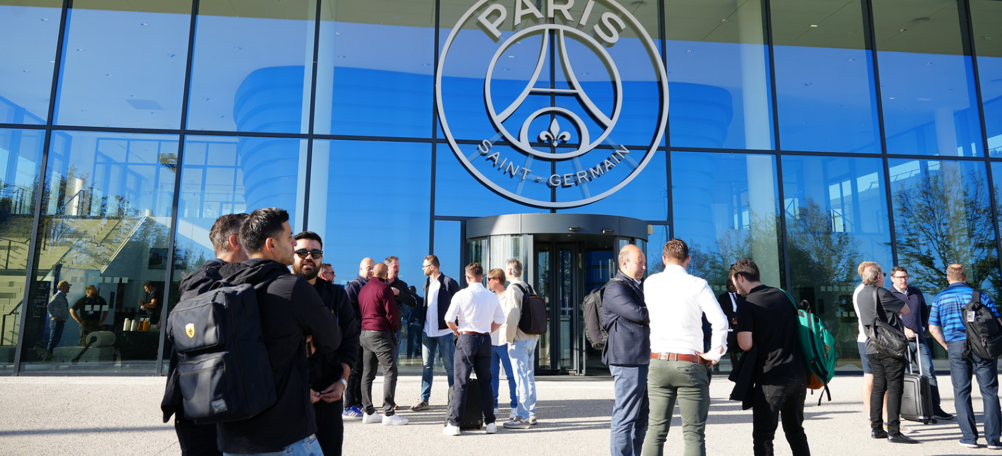
A Landmark Investment in Infrastructure
The Paris Saint-Germain Campus in Poissy is more than a training facility – it is a cornerstone of the club’s long-term vision. Nicolas Ramillon, Real Estate Director, explained how PSG invested €300 million of its own equity to build a 74-hectare site. Of these, 59 hectares are already in use, bringing together the men’s and women’s first teams, the academy, and the club’s foundation programmes. The scale of the project demonstrates PSG’s ambition to unite all levels of the club under one roof, while ensuring independence by fully financing the project without external debt.

From Construction to Operational Excellence
Strong governance was critical to delivering this project. Ramillon emphasised that monthly committee meetings with shareholders provided alignment, while the early involvement of end users – from medical staff to logistics teams – helped to shape the facilities for daily use. Sustainability was also integrated throughout: 4,000 trees were planted, archaeological findings managed responsibly, and water recycling systems installed. The Campus now operates like a small village, with over 500 people on site daily, including players, staff, and service providers.
Towards a Broader Ecosystem
Beyond football, PSG’s ambition is to transform the Campus into a wider ecosystem. Plans are underway to construct a dedicated women’s first team building, expand academy residential capacity, and create new facilities for the foundation. Longer term, the club is considering investments in healthcare, education, innovation hubs, and hospitality infrastructure such as hotels. By keeping full control of its land, PSG ensures that it can pursue these projects in line with its strategic vision.
Unlocking New Business Models
Alongside this infrastructure vision, Arnaud Delpech (Fan Interaction Manager) and Maxime Boileau (Non-Matchday Revenue Manager) presented PSG’s approach to diversifying revenue. With Parc des Princes sold out for 166 consecutive matches, ticketing growth is limited. Instead, PSG has built a comprehensive non-matchday portfolio, ranging from premium fan tours and birthday experiences to large-scale corporate events. The Campus adds further opportunities with its auditorium, panoramic lounge, and year-round sports activities

Balancing Sport and Business
Delpech and Boileau stressed that success depends on balance. The Campus is, first and foremost, a high-performance environment for players and staff. Commercial use must therefore be carefully coordinated to avoid disruption. Dedicated project managers now oversee non-matchday activities, ensuring they complement rather than conflict with the sporting schedule. This dual approach – world-class sporting facilities paired with strategic business diversification – makes PSG’s model stand out.
Key Takeaways
• Strong governance and early end-user involvement are vital in major infrastructure projects.
• A world-class facility like Campus PSG must be designed as a holistic ecosystem uniting sport, education, community, and business.
• Diversifying non-matchday revenues ensures financial stability while respecting sporting priorities.

