Day One: Building the Framework for Future Action
The first day focused on collaboration and strategic alignment. Cohort members shared valuable environmental and operational data from their respective clubs and stadiums, creating a transparent foundation for benchmarking and collective learning. These exchanges enabled participants to identify both common challenges and innovative approaches already being implemented across Europe.
Through a dedicated cohort session, the group laid the groundwork for how sustainability will be addressed within the ESSMA community moving forward. Discussions centred on defining priorities, establishing measurable objectives and strengthening the integration of sustainability into core business strategy rather than treating it as a standalone initiative.
Throughout the day, various clubs shared their stories and strategies on sustainability. We would like to highlight the most important takeaways for our ESSMA members:

Tottenham Hotspur: Built for Impact
One of the highlights was a presentation by Marcus Parry from Tottenham Hotspur Stadium, sharing the club’s environmental strategy and operational approach.
Key learnings included:
-
Net Zero ambition by 2040, with Scope 1 & 2 emissions already reduced by 37% from their FY2022 baseline.
-
A strong focus on procurement emissions, which account for the largest share of their footprint (56% from purchased goods & services).
-
Tangible food-related savings, such as an average 2,200 kgCO₂e reduction per EPL game through product switches.
A particularly remarkable operational insight was their reusable cup retention rate of approximately 96% – significantly higher than many other venues. This will be explored further within the cohort as a best-practice case: how design, communication, deposit systems and fan engagement can combine to achieve near-closed-loop performance.
The key takeaway: sustainability at Tottenham is embedded in operations, procurement and commercial partnerships – not positioned as a side initiative, but as a business driver.
–
Croke Park: Sustainability as behaviour Change
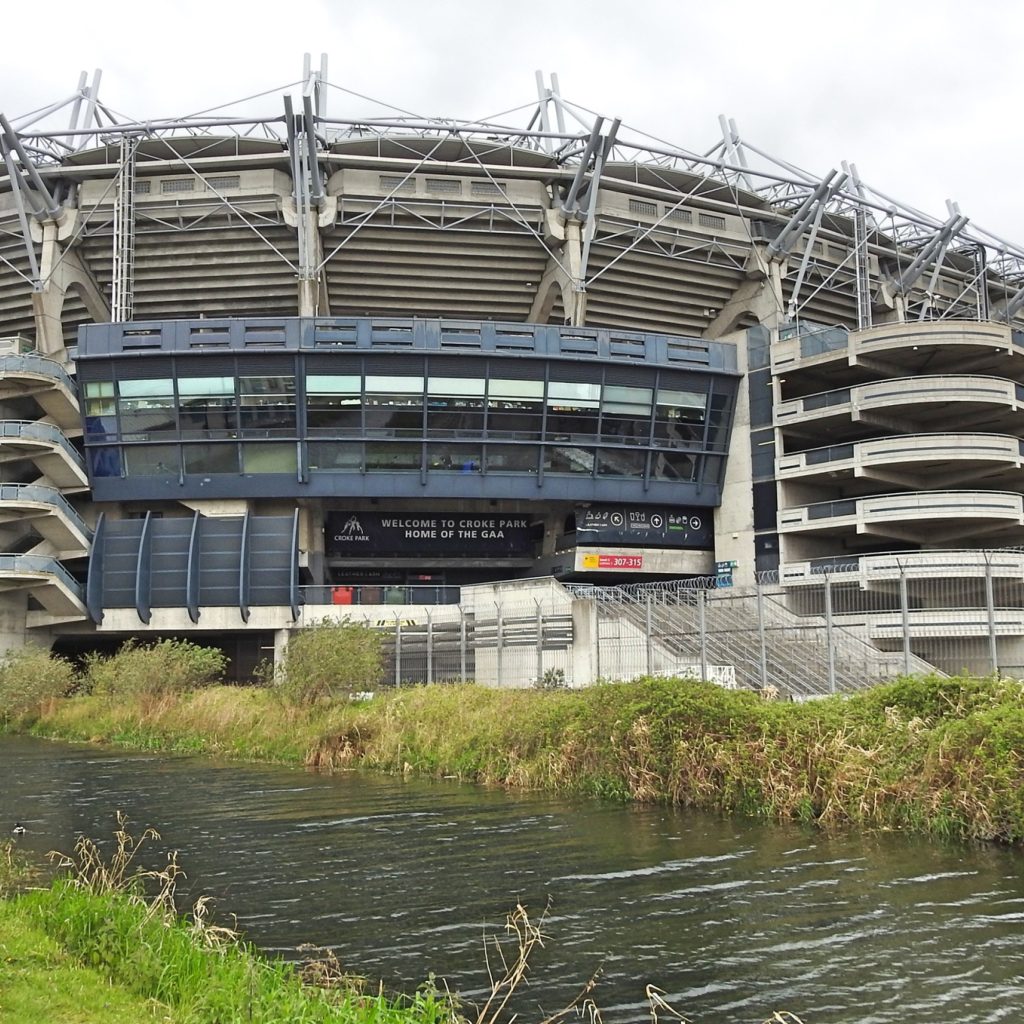
As host venue, Croke Park presented its approach to large-scale engagement and operational delivery. With a capacity of over 82,000 and more than 1.5 million annual visitors, the stadium uses its scale as an educational platform.
A standout initiative is “Sustainability Day”, designed to:
-
Increase awareness among fans and visitors
-
Encourage measurable behaviour change (waste sorting, sustainable travel)
-
Align matchday experience with climate objectives
Operational measures include:
-
Updated multi-stream bin systems and Green Team volunteers
-
Post-event waste audit
-
Using their own Croke Park 50 Mile Menu (fresh locally sourced ingredients, with menu’s that are seasonal)
-
Travel surveys to better understand Scope 3 emissions
-
Water refill stations and messaging
-
Eco-labels highlighting lower-impact food choices
Importantly, Croke Park openly shared the challenges behind implementation: stakeholder coordination, behaviour change fatigue, confusion around bin signage and the difficulty of measuring impact. This transparency allowed for honest discussion within the group on how to improve fan engagement strategies at scale.
The lesson: infrastructure alone is insufficient. Sustainability must be designed as a behavioural journey.
–
Juventus FC: Real Estate and Construction – The hidden sustainability lever –
Another important contribution came from Juventus, focusing on the sustainability impact of real estate development. Rather than viewing construction as a one-off capital expense, Juventus approaches building and refurbishment as “atypical sustainability events” with their own emissions and lifecycle accountability.
Key insights included:
-
Application of Minimum Environmental Criteria (C.A.M.) in procurement for wood, steel and concrete.
-
Strict requirements for recycled content and certified materials.
-
Alignment between C.A.M., LEED and BREEAM frameworks.
-
Integration of material data into KPIs, allowing construction impacts to be measured within annual sustainability reporting.
The broader message: stadium sustainability cannot focus solely on matchday operations. Capital expenditure, refurbishment and long-term real estate strategy have major embedded carbon implications – and must be integrated into benchmarking tools.
–
FC Porto: Inclusion and Accessibility – Expanding the sustainability definition –
The cohort also explored the social dimension of sustainability, including initiatives from FC Porto around inclusion and accessibility. One initiative that sparked particular interest was the introduction of a sensory room – a relatively low-investment, high-impact intervention supporting neurodiverse visitors and enhancing community value.
This discussion reinforced that environmental and social sustainability must be considered together. True sustainability is not only about emissions reduction, but about inclusive venue design.
The day concluded with a visit to the iconic Guinness Storehouse, offering members an opportunity to experience a globally recognised visitor destination that combines heritage, branding and operational excellence. The evening continued with a networking dinner at the Storehouse restaurant, providing an informal setting for further exchange of ideas and strengthening professional connections within the cohort.
–
Day Two: Operational Excellence at Croke Park
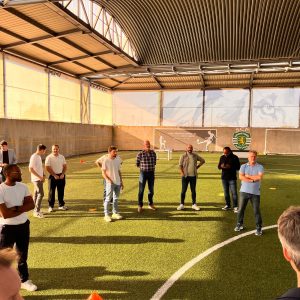
The second day shifted from strategic discussion to on-site implementation, with an in-depth tour of Croke Park. With a capacity of more than 82,000 spectators, the stadium stands among the largest in Europe and is widely recognised not only for its sporting significance but also for its leadership in sustainable venue management.
Participants gained insight into how the stadium integrates renewable energy solutions, advanced waste management systems and community engagement initiatives into its daily operations. The visit demonstrated how sustainability can be embedded across infrastructure, procurement, event delivery and stakeholder engagement.
After the stadium tour, we ended this cohort with a final discussion between the different attendees. This session reinforced a central message: sustainability within the stadium industry is no longer a future ambition, but a structured and measurable responsibility that demands consistent action today.

Driving Collective Progress
The Dublin cohort demonstrated the strength of knowledge exchange within the ESSMA network. By combining strategic dialogue, transparent data sharing and real-life operational insights, members collectively advanced their understanding of how to deliver meaningful environmental impact within complex venue environments.
Despite the fact that not all information can be shared, we have nevertheless extracted a few key takeaways for our members from these two days:
-
Procurement dominates emissions – particularly catering and capital goods.
-
Reusable systems require design excellence to achieve high retention rates.
-
Construction and refurbishment are sustainability events, not side notes.
-
Data transparency enables learning, especially when identifying performance outliers.
-
Inclusion and accessibility are essential social pillars, not optional extras.
The Dublin meeting demonstrated how structured collaboration accelerates progress. By combining transparent data sharing, real-world operational insight and collective benchmarking, the ESSMA Sustainability Cohort continues to move from discussion to implementation.
We look forward to welcoming our cohort members at the next ESSMA Sustainability Cohort and continuing this important work together. The group will reconvene at Allianz Stadium (Torino) in May to continue refining the benchmarking framework and sharing practical solutions.
ESSMA extends its sincere appreciation to Peter and Colin from Croke Park for their generous hospitality and valuable contributions, as well as to all cohort members for their active participation in a forward-thinking and solution-oriented dialogue.
ESSMA encourages its clubs, stadiums, leagues and federations to continue sharing their sustainability journeys, innovations and lessons learned. By showcasing best practices and measurable progress, the European stadium community can accelerate collective impact and shape a more responsible future for our venues.