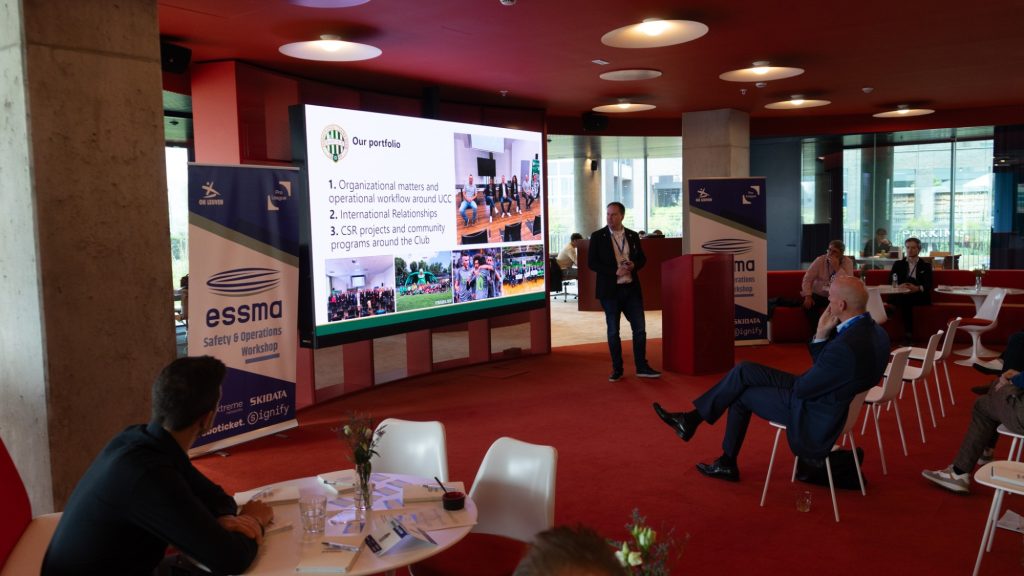
One major topic addressed at the workshop was the ongoing challenge of hooliganism in football stadia, with clubs across Europe facing the difficult task of balancing fan engagement, security, and available resources. The increasing incidents of violence and disruptions continue to pose safety concerns, impacting both the fans and the broader football community.
The case of Ferencvaros highlights how inadequate preparation and tight schedules between matches can create unsafe situations. During the qualifying phase of European competitions, limited time and uncertainty around the opposition led to lapses in security. The situation escalated when supporters arrived early, triggering clashes and resulting in fines for the club. This incident underscores how challenges like tight timelines and poor communication can lead to dangerous circumstances.

On the other hand, clubs like Feyenoord have taken proactive measures by building strong relationships with fan groups. By fostering open and transparent communication, Feyenoord has successfully reduced incidents of pyrotechnics and other safety concerns. This approach, which encourages accountability among fans, has created a safer environment, with no significant pyrotechnic-related incidents for over two years. It shows that fan cooperation and proactive dialogue can go a long way in preventing unsafe situations.
However, not all clubs have seen the same success. For example, RCS Charleroi continues to struggle with managing fan behaviour, particularly among ultra groups who often act independently of the club. Despite efforts to implement clear fan regulations, misinformation and heightened tensions within supporter groups have made it difficult to create a more cooperative atmosphere. To address these issues, the club is exploring a security charter to clearly define the responsibilities of its fans, although full implementation remains a challenge.
In light of these experiences, the need for effective preventive measures, strong communication, and enhanced security practices is evident. Many clubs are investing in additional resources, such as private security and increased surveillance, and adopting zero-tolerance policies toward violence. However, clubs often face a mismatch between their responsibilities and the limited legal powers they have to enforce these measures without external support. This highlights the need for a stronger legal framework that can provide clubs with the necessary tools to effectively manage fan behaviour.
In conclusion, tackling hooliganism in football requires a holistic approach that combines fan engagement, preventative strategies, and legal support. The experiences of various clubs demonstrate that success lies in balancing security measures, fan cooperation, and collaboration with law enforcement to ensure a safe and enjoyable atmosphere for all.


