

Across these discussions, several key insights stood out:
1. Targeted use of technology delivers the greatest impact
What made this particularly interesting is the shift away from “technology for the sake of innovation” towards solving clearly defined problems. The Danish biometric approach and AI-driven CCTV examples showed that limiting scope (e.g. focusing only on banned individuals or specific incidents) not only improves operational efficiency but also increases legal compliance and fan acceptance—two of the biggest barriers to implementation.
2. Data and evidence are essential for informed decision-making
The Belgian pyrotechnics study stood out because it challenged assumptions with concrete data. By quantifying usage, injuries, and underreporting, it revealed gaps that were previously underestimated. This highlights how evidence-based approaches allow stakeholders to move beyond perception-driven policies and develop more targeted, credible, and effective strategies.
3. Clear governance and decision-making structures save time—and lives
This topic resonated strongly due to its direct link with critical incident management. The showstop discussion demonstrated that in emergency situations, hesitation is often caused by unclear authority rather than lack of awareness. Having predefined roles, communication lines, and decision frameworks enables immediate action, which can be decisive in preventing escalation.
4. Technology must support, not replace, people
Across multiple sessions, it became clear that even the most advanced systems rely on human interpretation and intervention. Whether validating biometric alerts or analysing AI-generated footage, human judgement ensures context, proportionality, and accountability. This balance is crucial to maintain trust and avoid over-reliance on imperfect systems.
5. Safety is becoming a strategic function within stadium organisations
Perhaps one of the most forward-looking insights is the evolving role of safety teams. No longer limited to compliance or matchday operations, they are increasingly influencing infrastructure investment, fan experience, and ESG strategies. This shift positions safety as a key contributor to long-term organisational value rather than a purely operational cost.
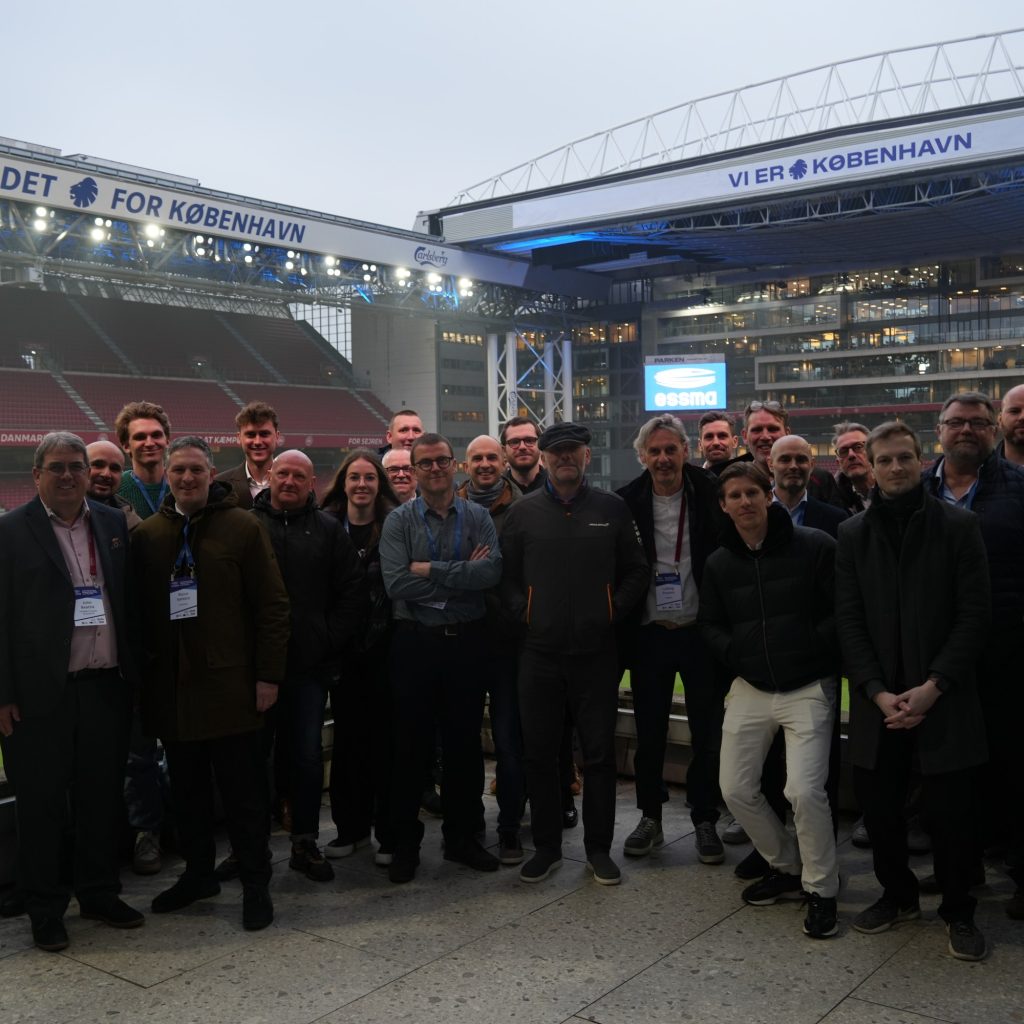
For those who were unable to attend the workshop in Copenhagen, or for participants who would like to revisit the content, all presentations are now available on the ESSMA publications page (for members only). In addition, pictures from the event can be found on our Flickr page.
ESSMA would like to extend its sincere thanks to F.C. Copenhagen for hosting this event and workshop. We would also like to thank all the speakers for sharing their valuable insights and experiences. We look forward to welcoming you at the next ESSMA event in Malmö, where we will continue driving innovation and collaboration across the stadium industry.


