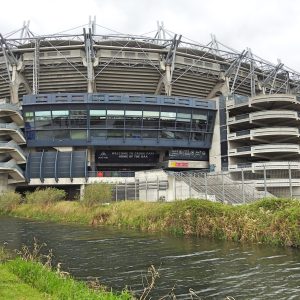
Anfield Road Stand Expansion Officially Completed
Liverpool FC has officially completed the long-awaited expansion of the Anfield Road Stand, with the project receiving its safety certificate on 4 April 2025. This marks the final step in a significant redevelopment that has increased Anfield Stadium’s total capacity to 61,276, reinforcing its status as one of the largest football grounds in the UK.
The expansion, which adds 7,000 additional seats, began in September 2021 and was initially scheduled for completion ahead of the 2023/24 season. However, delays caused by the main contractor Buckingham Group entering administration in 2023 led to a temporary halt in construction. Rayner Rowen Construction took over in September 2023 to finalise the works. Despite these setbacks, the upper tier of the stand gradually opened in phases over the course of the current season.
Now fully operational, the Anfield Road Stand offers improved amenities, including new hospitality lounges, wheelchair-accessible spaces, and enhanced facilities for media and teams. The redevelopment aligns with Liverpool’s commitment to maintaining the historic character of Anfield while enhancing the fan experience.
Liverpool FC expressed gratitude to supporters for their patience throughout the phased opening. The club also acknowledged the efforts of all those involved in overcoming challenges to deliver a world-class facility.
The completion of the Anfield Road Stand follows the successful Main Stand expansion in 2016 and represents another milestone in the club’s ongoing stadium development strategy, aimed at future-proofing Anfield and securing long-term matchday revenue growth.
Udinese Launches Football’s First Renewable Energy Community
Italian Serie A club Udinese, in partnership with Bluenergy Group, has introduced ‘Energia in Campo’, reportedly the first renewable energy community in football. This initiative centres around a solar park installed on the roof of Bluenergy Stadium, comprising 2,409 photovoltaic panels expected to generate approximately 1.1 million kilowatt-hours annually.
Construction of the photovoltaic system commenced in February 2024, following Bluenergy Group’s acquisition of the stadium’s naming rights in October 2023. The system is designed to supply around 70% of the stadium’s energy needs, with the surplus 30% allocated to the local energy community. This community will benefit from incentives provided by the Energy Services Manager for energy produced and consumed simultaneously.
Proceeds from this venture are earmarked for social initiatives, including the establishment of a residential care facility for young individuals with eating disorders and support for the Friuli Centrale University Health Authority’s Child Neuropsychiatry facility.
Franco Collavino, Udinese’s director general, described the project as a historic milestone, positioning Bluenergy Stadium as a global sustainability model and strengthening its role within the local community. Alberta Gervasio, CEO of Bluenergy, emphasised the project’s role in reducing the stadium’s environmental impact and fostering renewable energy sharing among businesses and fans, thereby delivering added value to the region.
BMO Field Undergoes Extensive Upgrades for 2026 FIFA World Cup
In preparation for the 2026 FIFA World Cup, Toronto’s BMO Field is undergoing significant renovations to meet FIFA’s hosting standards. The project, with a budget nearing $150 million, is a collaborative effort between the City of Toronto, contributing $123 million, and Maple Leaf Sports & Entertainment (MLSE), adding $23 million.
Key Enhancements:
- Seating Capacity: The stadium’s capacity will temporarily increase from approximately 30,000 to 45,000 seats by adding 17,000 temporary seats on the north and south sides.
- Technological Upgrades: Installation of four new LED video boards, modernised lighting, sound, and broadcast systems, and enhanced Wi-Fi connectivity.
- Hospitality and Amenities: Construction of a rooftop terrace and new VIP boxes accommodating 1,000 fans on the north side, along with a new club lounge on the west side at midfield.
- Player Facilities: Upgrades to locker rooms and the playing surface to meet elite international standards.
Construction Timeline:
The renovations are divided into two phases:
- Phase One: Commenced in December 2024 during the off-seasons of Toronto FC and the Toronto Argonauts, with completion expected by August 2025.
- Phase Two: Scheduled to begin in December 2025 and conclude by March 2026, ensuring readiness for the World Cup matches starting in June 2026.
Regular events at BMO Field will continue during the renovation period, though some temporary restrictions may apply.
Historic Significance:
Toronto is set to host six World Cup matches, including the first-ever men’s World Cup game played on Canadian soil on 12 June 2026. The city will share hosting duties with Vancouver, each hosting five group stage matches and one knockout round game, with Vancouver also set to stage a round-of-16 match
Arena Katowice Officially Opens with Dramatic Derby Victory
GKS Katowice has inaugurated its brand-new home ground, Arena Katowice, with a thrilling 2-1 win against local rivals Górnik Zabrze. The match, held on 30 March 2025, saw Filip Szymczak score the decisive goal in the 101st minute, much to the delight of the full house of 15,048 fans.
Located just south of the historic Stadion Miejski – GKS’s former home since 1955 – the new stadium is part of a larger sports complex. This includes a multi-purpose hall with over 3,000 seats, which will host the club’s volleyball operations. The entire project required an investment of more than PLN 400 million (approx. £79.9 million).
After securing promotion from the I Liga last season, GKS bid farewell to Stadion Miejski with a 1-0 win over Zagłębie Lubin earlier in March. With Arena Katowice now open, the club has resumed season ticket sales for its remaining home matches, including fixtures against top-flight sides like Legia Warsaw and Lech Poznań.
Join Our Team at DrainTalent
Are you eager to be part of an innovative start-up poised to make a significant impact on the international football scene? DrainTalent is seeking dynamic professionals to join our ambitious team.
Current Opportunities:
- Sales Manager: Drive our sales initiatives and foster relationships within the sports industry.
- Implementation Manager: Oversee the deployment of our cutting-edge systems across various sports venues.
For more information on these roles and to apply, please visit our Careers Page.
If you have any further questions or require additional information, feel free to contact us.
Vacancy: Head Groundsman – RSC Anderlecht
Are you ready to take the next step in your career in pitch management at one of Belgium’s most historic football clubs? RSC Anderlecht is currently looking for a dedicated and experienced Head Groundsman to lead its groundskeeping operations.
As Head Groundsman, you will play a key role in ensuring the highest quality playing surfaces across the club’s stadium and training facilities. You will oversee daily pitch maintenance, manage a team of grounds staff, and work closely with coaching and operations departments to meet top professional standards.
Interested?
To find out more about the position, read the job description via this link
To find more on how to apply, please contact Frederic Veraghaenne.
? Reach out to [email protected]
Sparta Prague Signs Agreement to Rebuild Strahov Stadium
AC Sparta Prague and the Czech Football Association (FAČR) have signed a preliminary agreement to redevelop Stadion Evžena Rošického, located on Prague’s Strahov hill. This project aims to replace the deteriorated facility with a modern football stadium, seating approximately 35,000 spectators. FAČR President Petr Fousek highlighted the project’s significance in Czech football history.
Originally constructed in 1926 for Sokol gatherings, Stadion Evžena Rošického has been in disrepair and unused by the national team since 2022. Following a development tender issued by FAČR, Sparta Prague was selected to lead the redevelopment. The club has a five-year timeline to complete necessary documentation and secure building permits, with project costs estimated between CZK 4.5–5 billion. Completion is anticipated within this timeframe.
Prague 6 authorities support the investment, viewing it as a catalyst for revitalising the area and restoring its historical significance. Plans include enhancing transportation access, with a tram line from Malovanka to Strahov expected by 2027, alongside a proposed trolleybus route from Karlovo náměstí and improvements to road and parking infrastructure. Legislation mandates that the district will receive 10% of ticket sales, potentially generating CZK 20 million annually. Officials envision the stadium hosting various events beyond football matches, such as concerts and community activities.
Sparta Prague plans to depart from its current epet Arena in Prague 7, which, with a capacity under 19,000, no longer meets modern standards. The inaugural match in the new stadium could occur within 6–7 years, following an architectural competition set to commence soon, with initial designs potentially unveiled by the end of 2026.
Stadium Taranaki Set to Reopen Following Extensive Redevelopment
Stadium Taranaki in New Plymouth, New Zealand, is scheduled to reopen on 4 May 2025 with a complimentary celebration event, marking the completion of a significant redevelopment project. The stadium, formerly known as Yarrow Stadium, sustained considerable damage during the 2016 Kaikoura earthquake, leading to renovation efforts commencing in 2019.
The reopening festivities will feature the unveiling of the new East Stand to the public, accompanied by food trucks, live music, face painting, lawn games, and various activities both on the pitch and around the stadium. The event will run from 9:30 am to 12:30 pm, followed by two free Central Football matches kicking off at 12:30 pm and 2:45 pm.
Owned by the Taranaki Regional Council, the redevelopment represents the council’s most substantial infrastructure project to date. The stadium’s capacity now ranges between 22,000 and 23,000, with the flexibility to expand to the original 25,000 for major events. The newly constructed East Stand is positioned closer to the main pitch and is double-sided, allowing spectators to view events on two different fields.
Collaboration with the Ngāti Te Whiti indigenous people has ensured the incorporation of cultural elements into the new stand’s design. The redevelopment’s final budget was NZ$79.7 million (£34.7 million/€40.5 million/$44.2 million), with actual costs anticipated to remain below this figure. Taranaki ratepayers contributed under NZ$50 million, consistent with the amount approved in 2019. Additionally, the council secured NZ$30 million in funding from the government’s Infrastructure Reference Group Fund to support the project.
https://www.thestadiumbusiness.com/2025/04/07/stadium-taranaki-ready-to-reopen/
https://draintalent.com/nl/werken-bij/
https://stadiumdb.com/news/2025/04/canada_how_will_bmo_field_change_for_the_2026_world_cup
https://www.thestadiumbusiness.com/2025/04/03/udinese-claims-first-with-renewable-energy-venture/
https://www.thestadiumbusiness.com/2025/04/02/arena-katowice-opens-its-doors/