The challenge ahead of the 2026 FIFA World Cup
For the upcoming World Cup in North America, eight of the 16 host venues currently use synthetic turf. FIFA requires natural grass, yet some stadium operators have already signalled they will switch back to synthetic once the tournament ends. Unlike in Europe, natural turf has little tradition in North American stadiums, and many venues are domed or multipurpose, adding extra complexity.
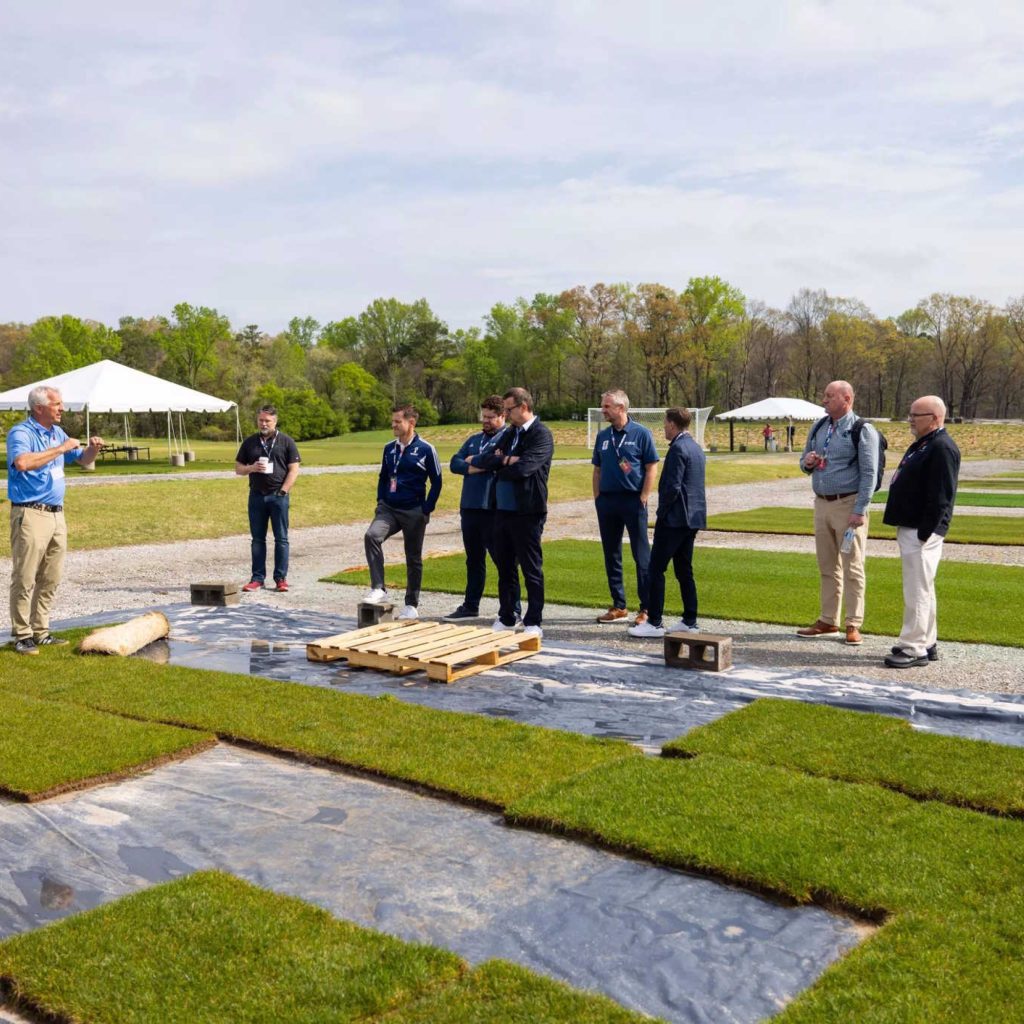
To address these issues, FIFA launched a research programme with the University of Tennessee and Michigan State University. Trials are underway to develop turf that can handle shade, different climates, and installation on hard stadium floors. The goal: to deliver a consistent playing experience across 104 matches in Mexico, the US, and Canada.
Early testing: promise and problems
At the FIFA Club World Cup, the “Shallow Turf Profile” system – hybrid grass grown on a movable base – was rolled out. It offered instant playability, but reactions were divided. PSG coach Luis Enrique criticised the “erratic bounce,” while Chelsea’s Reece James warned about strain on joints. Others noted slower ball speed or dryness, though some improvement was seen after rainfall. Arsène Wenger, FIFA’s Global Football Development Chief, promised refinements before 2026.
Meanwhile, at UEFA Women’s Euro 2025 test venues in Switzerland, plain natural turf overlays were installed two weeks in advance. Unlike in the US, no complaints emerged, though researchers caution against direct comparison due to different weather conditions and player profiles.

What comes next
FIFA’s turf scientists are now analysing data from biomechanical testing and sensors. Improvements under consideration include allowing more time for the turf to settle, adjusting watering routines, and refining rolling practices to stabilise the surface. Cooling protocols have also been updated, with lower thresholds for mandatory breaks during hot conditions.
The first World Cup match on the new surface is scheduled for Day 3 of the tournament at BC Place in Vancouver. With nine months left, turf specialists are working to ensure that by 2026, the focus will be on football – not the pitch.
? ESSMA members can access the full technical article here, which dives deeper into turf engineering solutions, climate-specific challenges, and the research findings behind FIFA and UEFA’s trials.
Content for this article was provided by our partner sportsfields.info
Discover more insights on their website: sportsfields.info
Interested in subscribing to sportsfields.info for more in-depth articles on pitch management? contact [email protected] for a special offer for ESSMA members.
Foto’s:
Mercedes-Benz_Stadium_Interior_in_2024
FIFA-Research-Project-Field-Day