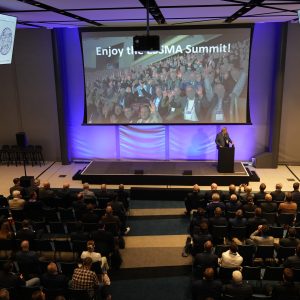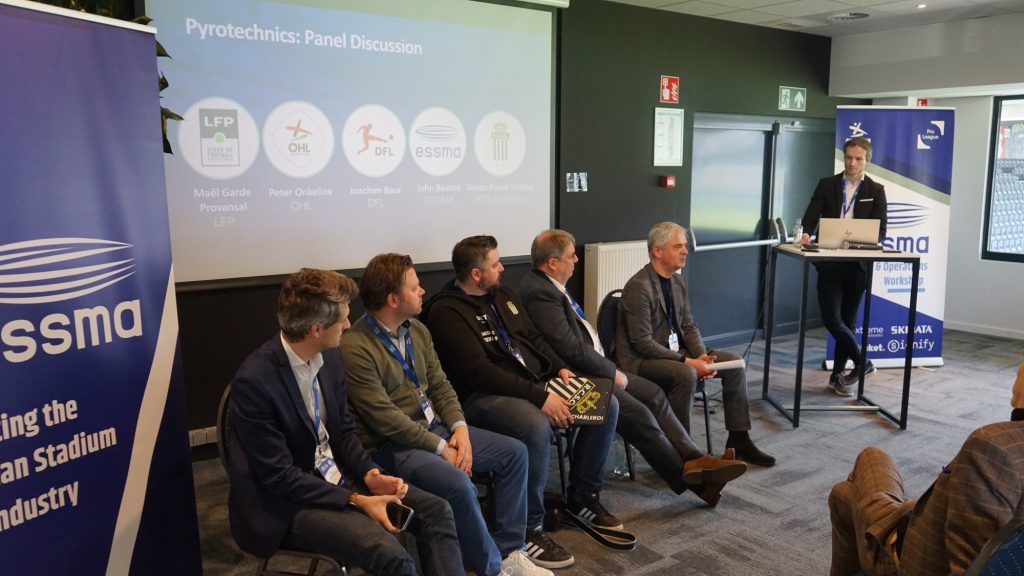

One of the key topics covered at the workshop was the use of pyrotechnics (pyro) in football stadiums, a contentious issue with differing views on how best to manage it. While some advocate for organised pyro displays, others believe stricter measures are necessary to prevent safety risks.
The Ligue de Football Professionnel (LFP) has conducted 52 controlled experiments with authorised pyro displays where no injuries occurred, demonstrating that pyro can be safely managed when appropriately controlled. However, preventing pyro from entering the stadium remains a significant challenge. Once inside, it becomes difficult to identify those responsible and build a case against them.
To address this, several countries, including Germany and the Deutsche Fussbal Liga, are exploring the use of access control systems combined with artificial intelligence (AI) to detect pyro before it enters the stadium. This technological solution offers a more effective method of preventing pyro incidents in real time, providing a proactive approach to the issue.
A key conclusion from ongoing discussions is that the decision on whether pyro should be legal or not should not rest with individual leagues. Instead, it is suggested that national legislation should set a clear regulatory framework, ensuring consistency across all clubs. Currently, there is an imbalance between the responsibility placed on clubs and the limited legal powers available to them to enforce safety measures effectively.
Clubs should only be fined if they fail to implement appropriate measures to prevent pyro from entering the stadium when given a correct, regulatory legal framework to do so or if they do not meet basic safety standards. This would ensure that clubs are held accountable for their actions but not penalised unfairly for issues beyond their control.
In conclusion, managing pyro in football requires a balanced approach, combining organised displays, technological solutions, and clear regulatory frameworks. With continued efforts to regulate and control pyro use, it is hoped that safer matchdays can be assured for all involved.